

Every weave carries an emotion.
Sourced from weaving clusters across India, and from the hands that keep them alive.
Shop the weaves
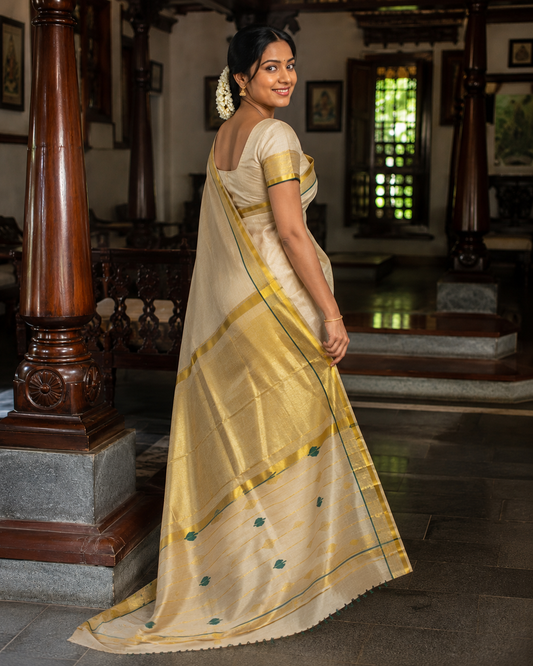
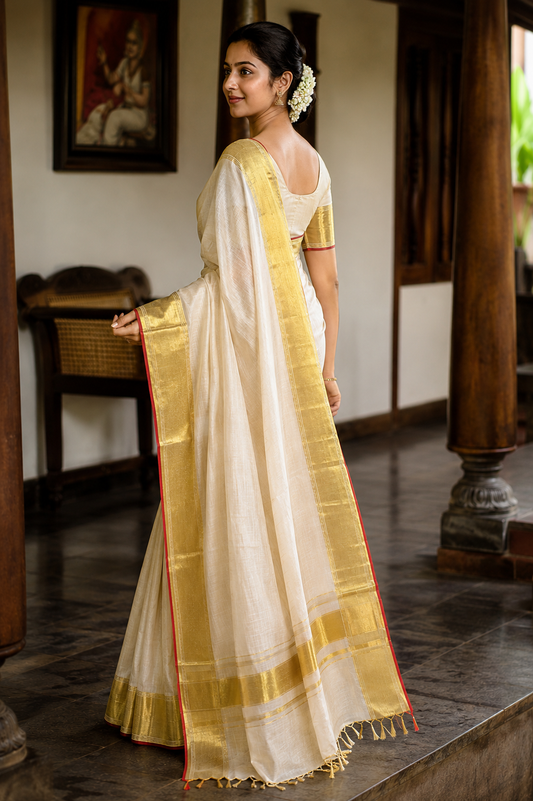
Two weaves to start with, and a third on the loom. Each piece woven to order, and labelled with where it came from.


Sarees on the loom
Handwoven to order in Kerala cotton and tissue. Each one comes off the loom, is washed to release the starch, and is signed for.
-
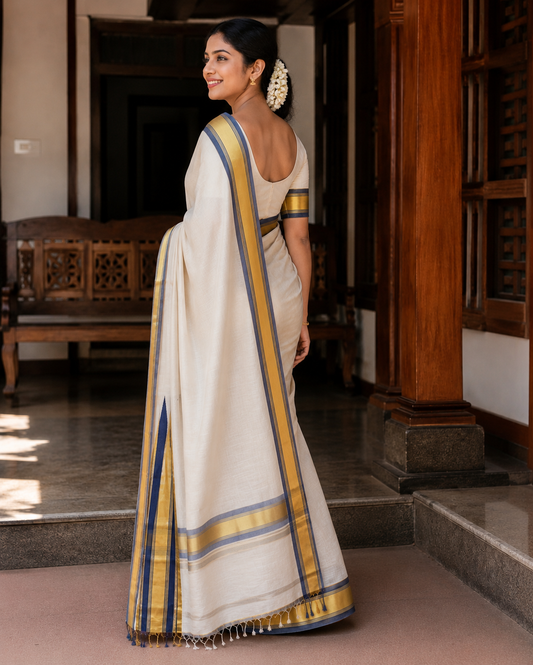
Pure Handloom Dark Blue Gold Chutti Kara Saree with Running Blouse - SRHKL030
Regular price Rs. 18,355.00 INRRegular price -
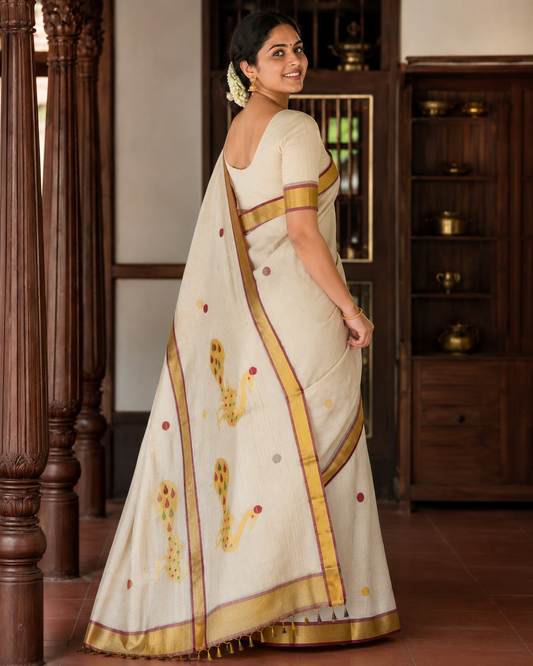
Pure Handloom Golden Peacock Saree with Running Blouse - SRHKL029
Regular price Rs. 12,259.00 INRRegular price -
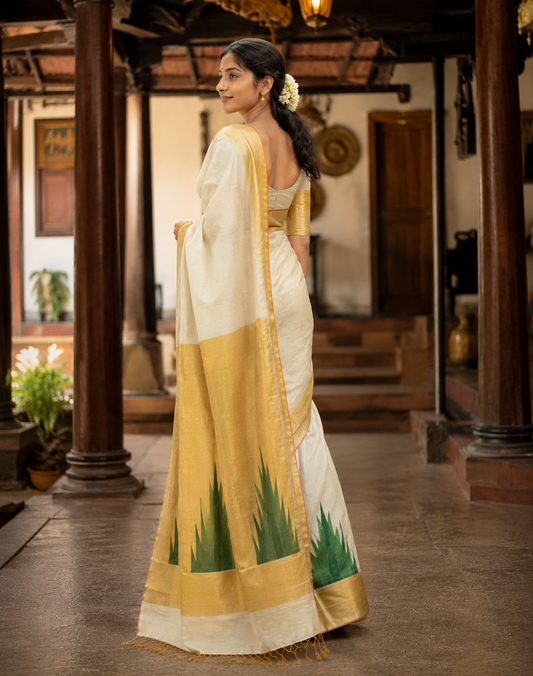
Pure Handloom Big Golden Border Green Temple Design Saree with Running Blouse - SRHKL028
Regular price Rs. 25,349.00 INRRegular price -
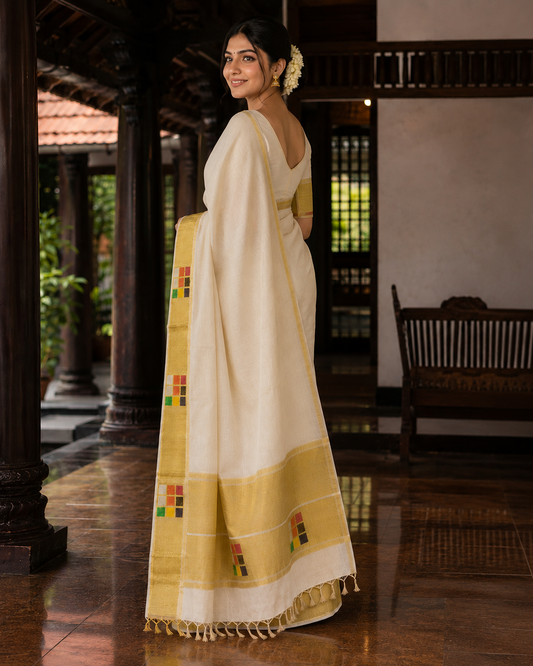
Pure Handloom Plain Multi-Color Box Saree with Running Blouse - SRHKL027
Regular price Rs. 20,349.00 INRRegular price -
Pure Handloom Tissue Saree – Green Leaf Design with Running Blouse - SRHKL026
Regular price Rs. 21,349.00 INRRegular price -
Pure Handloom Original Saree (100/100 Count) with Running Blouse - SRHKN025
Regular price Rs. 54,859.00 INRRegular price






Where it's from
We buy from the cluster, not a warehouse. Follow a place to the pieces woven there. New regions join as we reach them.
Nothing here is quick
A saree can take a weaver days at the pit loom. This is where the hours go.
The yarn
Spun, sized with rice starch so it can take the tension, and wound onto bobbins.
The warp
Stretched the length of the street, then drawn one by one through the reed.
The loom
The weaver works the treadles by foot and throws the shuttle across by hand.
The finish
Cut from the loom, washed to release the starch, and pressed. Then it is signed for.

A loom, and the person at it
Handloom is slow because a person is doing it. We buy directly from the clusters that still work this way, and we say who wove each piece.
Mundu, ready to wear
Kasavu and puliyilakkara borders, woven single. The everyday piece, made the slow way.
-
Premium Handloom Green Mundu with Colored Kasavu - LHMDB038
Regular price Rs. 4,250.00 INRRegular price -
Premium Handloom Colored Mundu with Colored Kasavu - LHMDB037-3
Regular price Rs. 4,100.00 INRRegular price -
Premium Handloom Colored Mundu with Colored Kasavu - LHMDB037-2
Regular price Rs. 4,100.00 INRRegular price -
Premium Handloom Colored Mundu with Colored Kasavu - LHMDB037-1
Regular price Rs. 4,100.00 INRRegular price -
Premium Handloom Colored Kasavu Mundu - LHMDB036-4
Regular price Rs. 3,200.00 INRRegular price -
Premium Handloom Colored Kasavu Mundu - LHMDB036-3
Regular price Rs. 2,500.00 INRRegular price


See the new weaves first
Message us on WhatsApp. We send the catalogue, hold your size, and tell you the moment a new piece comes off the loom. Nothing else.